Content is for informational purposes. Moose observation carries inherent risks — maintain safe distances at all times. Consult Ontario Ministry of Natural Resources guidelines before entering moose habitat.

Moose are the largest member of the deer family present in Canada, ranging from Newfoundland and Labrador west to British Columbia. Despite their size, they are frequently detected through indirect signs rather than direct sightings, particularly in dense boreal forest. Knowing what to look for significantly improves detection rates for observers unfamiliar with the terrain.
Browse Patterns
Moose feed on a wide variety of shrubs and aquatic vegetation. In winter, they rely heavily on woody browse — particularly willows (Salix spp.), trembling aspen (Populus tremuloides) and balsam fir (Abies balsamea). Browsed stems show a characteristic clean diagonal cut at roughly 1.5 to 2 metres above ground, distinguishing moose feeding from that of deer or beaver.
In areas with high moose density, repeated browsing creates visible browse lines — a horizontal ceiling effect on shrub and sapling height throughout a stand. This is particularly evident along lake margins and river corridors in northern Ontario, where willow thickets are heavily used during late winter.
Key Browse Indicators
- Diagonal stem cuts at 1.5–2 m height
- Stripped bark on young aspen and birch
- Twisted, broken branch ends (moose twist rather than bite cleanly on thicker stems)
- Consistent browse line visible along forest edges
Tracks and Trails
Moose tracks are distinctive: large heart-shaped hoofprints, typically 13–15 cm in length, with a pointed toe and a wide heel. They often register deeper at the toe due to the animal's forward gait. In soft mud along lake edges or creek crossings, full dewclaw impressions appear behind the main hoof, extending the total print to 20 cm or more.
Moose use the same travel corridors repeatedly, creating well-worn trails through dense stands. These trails often connect feeding areas to bedding sites or water sources. In snow, the wide body of a moose produces a distinctive swept channel between tracks, contrasting with the narrower trails left by deer.
Wallows and Mineral Licks
During the rut (late September into October), bulls create wallows — shallow depressions in wet ground that they urinate into and roll in. Active wallows have a strong musky odour detectable at close range. They are typically found in open areas near wetland margins or on trail edges and can be revisited by the same animal over multiple seasons.
Mineral licks — bare patches of exposed soil where minerals concentrate — attract moose throughout spring and early summer as animals replenish salts following winter. Lick sites in Ontario often show hoof churning, ground disturbance and scattered scat. The Ontario government's moose research programme has documented lick use patterns at several long-term monitoring sites.
Rubs and Antler Sign
Bull moose rub velvet from their antlers on small trees in late August and into September. Rubbed trees show smooth, shredded bark on trunks between 60 cm and 180 cm, with shredded material at the base. Saplings 5–10 cm in diameter are typically selected. Distinguishing moose rubs from deer rubs requires attention to height — moose rubs extend further up the trunk due to larger antler spread.
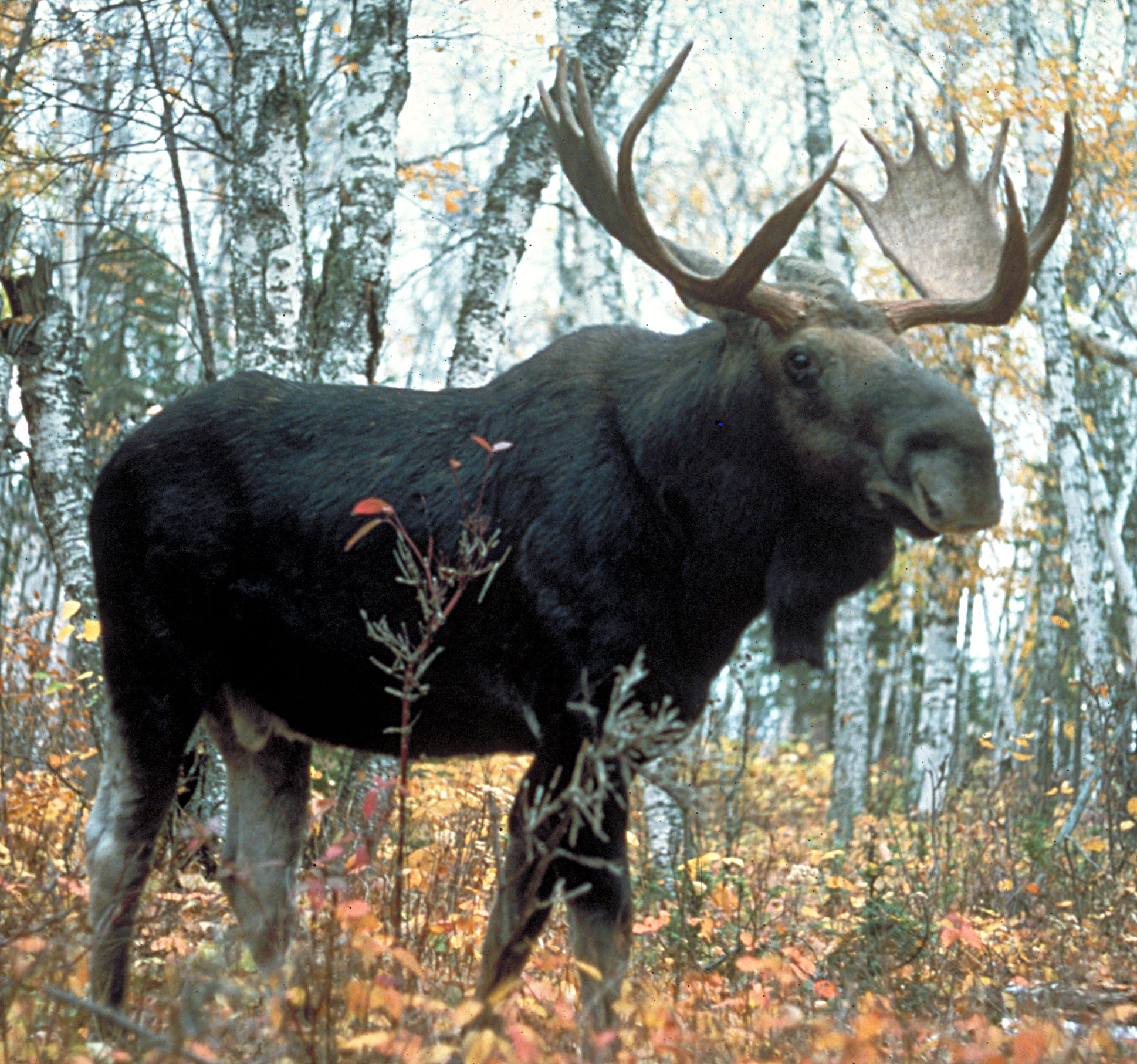
Scat and Pellets
Moose scat varies with diet. In summer, when green vegetation and aquatic plants dominate, it is dark, soft and clumped. In winter it forms firm, olive-shaped pellets roughly 2.5–3 cm long, often darker than white-tailed deer pellets and deposited in larger piles. Fresh scat retains moisture and slight shine; aged pellets grey and crack.
Seasonal Timing
The peak period for indirect sign detection in Ontario and Quebec is late winter (February–March) when snow reveals tracks clearly and browse sign is fresh. The rut window in late September and October produces the highest volume of direct sightings, as bulls are actively moving. Early morning and evening observation near lake edges or bogs yields the best results during summer months.
Observation Safety
Cows with calves in May–June are among the most dangerous wildlife encounters in Ontario. A safe viewing distance is generally considered at least 100 metres. During the rut, bulls may approach vehicles or humans that enter their territory. Back away slowly and avoid blocking escape routes.